About
Our History
Today, as throughout our six-decade history, the SFSU School of Cinema is committed to a curriculum that recognizes cinema to be an independent, powerful and unique medium in the world. Our programs combine theory and practice.
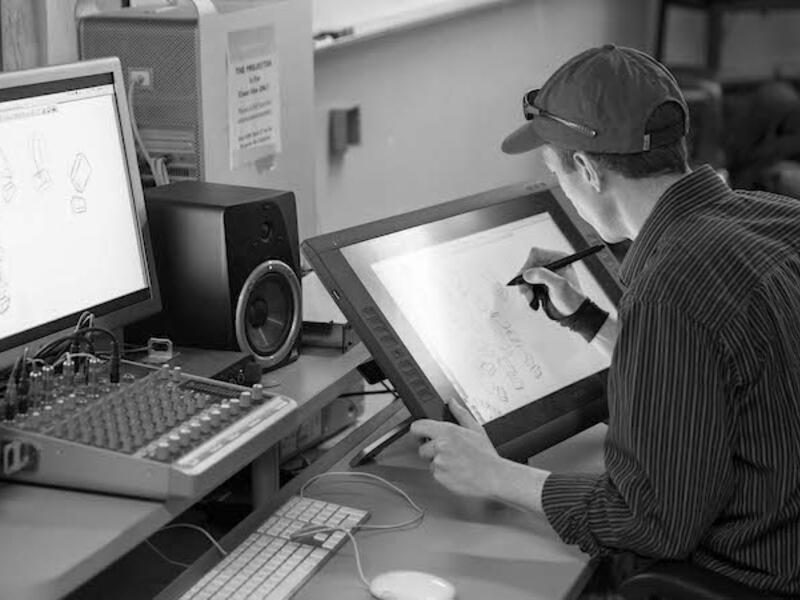
Our 2,500-square-foot shooting stage features large digital post-production studios and labs. Our screening room, the Coppola Theatre (Fine Arts 101), equipped for both 16mm and 35mm projection and featuring a Dolby sound system, is named for the former dean of the College of Creative Arts, August Coppola, whose efforts were primarily responsible for funding the Fine Arts building additions in the 1990s. Digital upgrades to sound and editing labs have further modernized our production facilities.
Filmmakers as diverse as Francis Ford Coppola, Ken Burns, Alex Rivera, Barbara Hammer, Trinh T. Minh-ha and Cheryl Dunye have visited campus to give talks, master classes and screenings of their work. Our alumni have also returned to critique student work, provide internships and continue the tradition of giving back to their community. We also have long-standing relationships with the San Francisco Film Society and Bay Area Video Coalition, among many other San Francisco-based film production and culture institutions.
Today, the School of Cinema serves more than 40 graduate students (Master of Arts and Master of Fine Arts) and about 900 undergraduate majors. Students take classes from a diverse group of more than 20 tenure-line faculty committed to exploring all dimensions of film and media production and studies: from independent filmmaking to experimental animation to critical and cultural theory.
Additionally, film producers living and working in the Bay Area teach here regularly. All the while, our faculty members continue to make films, write books on film and media culture, and give talks around the world on such diverse topics as international cinema, digital culture, television aesthetics, experimental narrative, sound design, screenwriting and the politics of the documentary film.
Equity, Diversity, Inclusion and Access
An upsurge in anti-AAPI hate and the indictment of the film industry’s role in dehumanizing Asian American and Pacific Islanders in Hollywood have taken place in recent years.
Community Agreements for Engagement
- Critique ideas, not people.
- Assume others’ best intent.
- Everybody is a teacher. Everybody is a learner.
- Ask for clarification and help.
- Recognize that all who are here belong here.
- Listen before speaking.
- Design a protocol and assign a role for moderation of discussion.
- Frame feedback constructively.
- Remove punitive consequences of discussions.
- Encourage and invite everyone to share (in their own way). [Step up. Step back. (Monitor your own participation and encourage all to participate).
- Allow (invite) people to make and learn from their mistakes.
- Try to stay on topic.
- Make it brief.
- Recognize that their inequalities among us (and be mindful of what you don’t know).
- Make transparent & conclusive decisions with action item agendas.
- Support shared agreements.
Statement of Values: Diversity, Equity and Inclusion
- We value respect and open-mind(ful)edness.
- We want courses and faculty that represent women and underrepresented groups.
- Engagement, collaboration, and presence
- Balance of theory and practice in everything we do
- Value different backgrounds in everything we do
- Respect: do unto others as you would have others do unto you. Treat others how you wish to be treated.
- Recognize your own filters.
- Create an environment that empowers all students through the recognition of inequalities.
- Recognize and value the achievements of women, people of color, and all underrepresented groups as a model for what we want to see in the cinema profession.
- Allow everyone to be heard and to shine.
- Be kind and patient towards each other.
- Actively create a space where all people can learn and grow equally.
- Show films that represent and value diverse voices.
- Recognize inequality in order to provide support needed.
- We value mutual respect between staff, faculty and students.
- We value collaboration and providing equitable opportunities in our learning environments.
- We encourage the existence of a diversity of voices in our school.
- Down with censorship!
Syllabus Statements
- The SFSU School of Cinema recognizes structural inequalities in the film and media industries and cinematic arts. We strive to achieve inclusion and access for all.
- We want our classrooms to look like the profession of the future: empowering women, people of color and underrepresented groups as vital and diverse voices in our society.
- We want to create an environment that empowers all students, recognizing and addressing the history of oppression in our industry. We want to “be excellent to each other!”
Subscribe to our newsletter
Get the latest Cinema student and alumni news, scholarships, opportunities, events and more.
From Our Community
“SF State taught me different ways of telling a story and thinking about cinema. The professors want you to think outside the box.”