Facilities and Exhibition Spaces
Art facilities are located on the first and second floors of the Fine Arts building.
Studios
Utilize our well-equipped studio facilities, computer laboratories and graduate studio spaces.
Ceramics
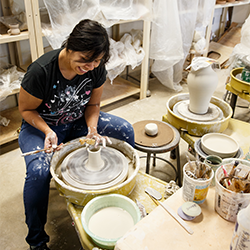
The ceramics area facilities include space for production, surface design, firing, displaying and documenting work. The clay studio is over 1,500 square feet and has tables for hand building, a large slab roller and extruder and 20 electric Brent wheels for throwing. The 800-square-foot glaze room holds raw materials to mix glazes, in house and commercial glazes, a spray booth and spray guns. There is a 500-square-foot critique room used to install work and give slide lectures. There are also gas and electric kilns.
You’ll have additional access to the ceramic studio outside of class time and supervised access to the glaze and kiln rooms. If you’re a graduate student in ceramics, you’ll share a 1200-square-foot studio for your work. There is a small room used to photograph work connected to this space.
Digital Media and Emerging Technologies
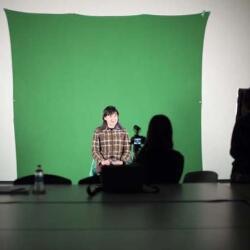
This studio, formerly called Conceptual Information Arts, brings together art, digital media and emerging technologies. Informed by a strong conceptual foundation and a focus on the impact of technology on culture and society, you learn digital production skills and experiment in emerging and cross-disciplinary practices.
Fiber and Material Practice
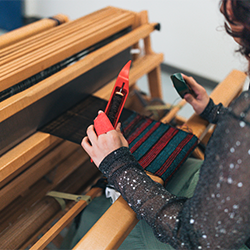
The fiber and material practice facilities include spaces for weaving, printing, dyeing and laser cutting. The weaving studio has 21 Gilmore floor looms, three winding stations and a large yarn closet with a wide range of materials for student projects. The print area includes heat-press, Thermofax and sewing machines, largescreen wet sink and two large 10-foot padded tables that provide space for screen printing and large projects. The dye lab has six state-of-the-art industrial induction burners, vertical steamer, ventilated ironing stations, washer and dryer. It is fully stocked with fiber reactive and acid dyes.
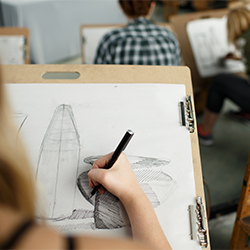
Painting/Drawing
Painting area facilities include three ventilated studios for a range of drawing and painting classes. They include a large Beaux-Arts style studio for all drawing courses and two medium-sized studios suitable for painting. There is a rack room for cleanup, hazardous waste disposal and painting and drawing storage. Undergraduate and graduate students in Art courses work in the studios throughout the day and evening whenever classes are not being held.
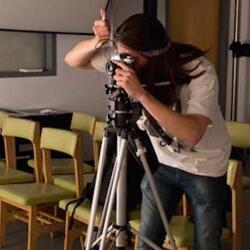
Photography
Facilities in the photography area include analog darkrooms and digital labs. For analog processes, there is a 20-station group darkroom with 4-foot-by-5-foot enlargers for processing prints, individual darkrooms for processing film and a group area for processing film. The digital labs consist of 12 Macintosh based workstations networked to two 24-inch-wide Epson printers and 10 Epson V700 scanners. There is a specialized lab for working with extra-large media up to 44 inches on two large format Epson printers and an 11-inch-by-17-inch auto-duplexing black-and-white and color laser printer. Graduate students also have access to a separate black-and-white darkroom to set up for specialized processes.
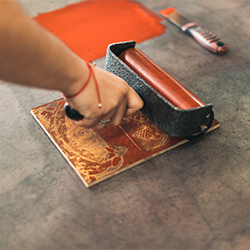
Printmaking
The printmaking area is equipped with studio space that promotes a cross-disciplinary approach. Intaglio, relief, letterpress and lithography print shops are all connected allowing a free flow of alternative research to new methods of impressions. A computer lab for printmaking students also provides opportunities for digital explorations. Equipment and facilities available include three hand litho presses capable of printing up to 30-inch-by-40-inch images from aluminum plates and stones, three etching presses (two with the capability of printing up to 30 inches by 40 inches), two Vandercook letterpresses, darkroom including enlarger, copy camera, NuArc platemaker and digital options.
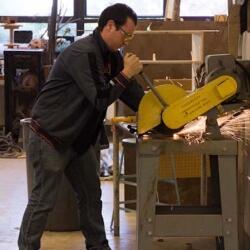
Sculpture
The sculpture and expanded practice area implements a wide range of traditional and experimental methodologies that coincide with fabrication, lectures and critique seminars. The area consists of about 9000 square feet of shops, workspaces, installation/critique space and graduate studios. The woodshop is furnished with a sawstop table saw, panel saw, sliding-compound-miter saw, band saws, routers, planers, jointer, a suite of stationary sanders and drill press, along with powered and manual hand-tools. The metal shop is equipped with M.I.G., stick, and oxy-acetylene welders along with a 40-inch foot sheer, band saws, bench grinders, belt/disc sander, horizontal band saw, chop saw, benders and an assortment of powered and manual hand-tools. The installation/critique space is equipped with a professional track-light grid on dimmers. There are two flexible indoor workspaces and a covered outdoor area, all with large worktables. Three graduate students maintain studios and contribute to the stewardship and leadership in the area.
Exhibition Spaces
Fine Arts Gallery
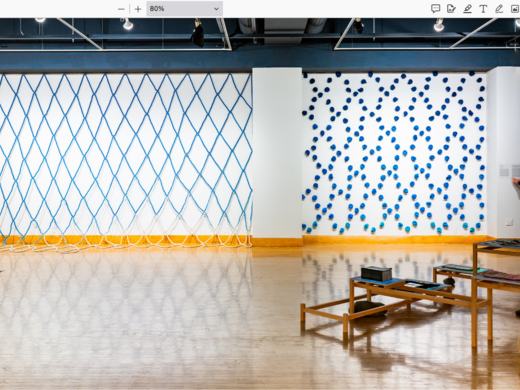
The 3,000-square-foot Fine Arts Gallery presents both professional and student-oriented exhibitions every semester. Professional exhibitions are organized to spotlight the range and diversity of both contemporary and historical art.
Global Museum
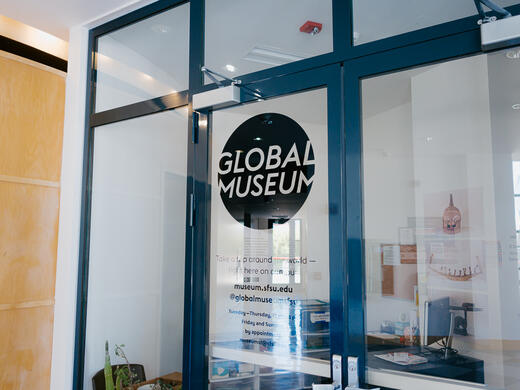
Established in 2014, the 1,922-square-foot Global Museum serves as an academic resource and exhibition hub for the University and surrounding community. Permanent collections include art and material culture from Africa, the Americas, Asia, Egypt and Oceania, spanning the ancient world to the 20th century. Highlights include the mummy Nes-Per-N-Nub, once a high priest of the Temple of Karnak. His remains occupy a triple-nesting sarcophagus, one of only three in the U.S. Adolph Sutro, San Francisco mayor in the 1890s, purchased the mummies and displayed them at the city’s Sutro Baths until the mid-1960s. George K. Whitney Jr. donated them to SF State in 1964.
Martin Wong Gallery
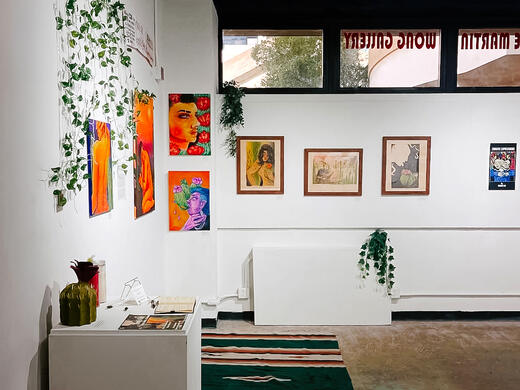
The Martin Wong Gallery provides the opportunity to exhibit personal works in a professional context. Under the guidance of faculty sponsors, artists and student curators are encouraged to develop a greater understanding of installation and presentation etiquette, fine-art handling techniques and management and communication skills.