SF State Bay Area Television Archive is a treasure trove of history on film — and streaming online
Students can license historical footage for their own work for free, while most filmmakers must pay to do so
- By Matt Itelson
When filmmakers want access to historical footage of the Bay Area’s past, they turn to San Francisco State University, home to a massive and unique archive of local television news-film and documentaries from the 20th century. While Academy Award-winning films such as “Judas and the Black Messiah,” “Milk” and “O.J.: Made in America” paid market rate to license the footage, San Francisco State students may do so for their own work at no cost.
Based in the J. Paul Leonard Library on campus, the Bay Area Television Archive features more than 135,000 videos from Bay Area television stations. A visit to the new Bay Area Television Archive website is a YouTube-like rabbit hole of a time machine dedicated to the issues and events that gripped the region decades ago.
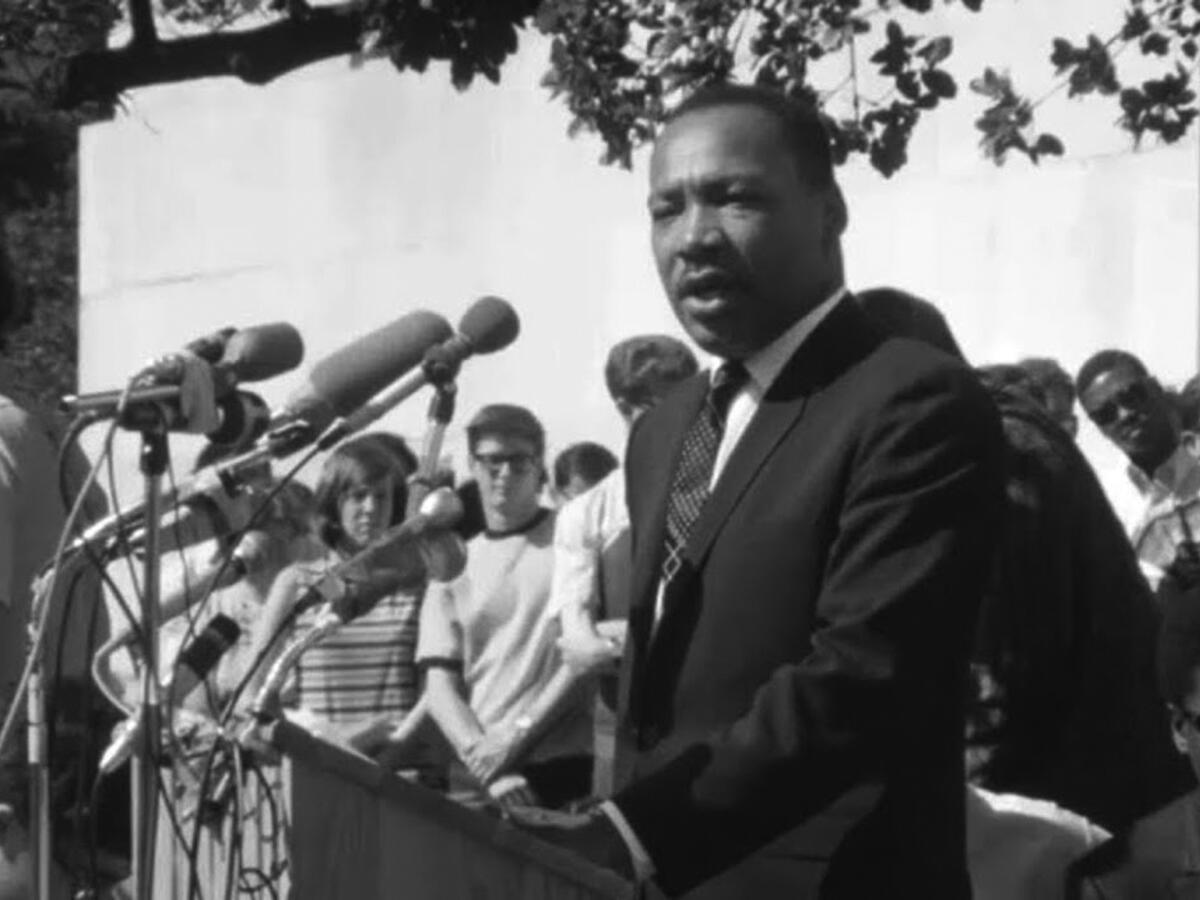
The original daily news coverage allows one to learn how major events unfolded and how communities responded when the word was spread. Curated collections feature the civil rights movement (including the Third World Liberation Front student strike at SF State), the Zodiac Killer, 1970s adult entertainment, old-school hip hop and much more. One can watch speeches by Martin Luther King and Maya Angelou’s entire KQED-TV series “Blacks, Blues, Black” from 1968 — rediscovered and restored by Alex Cherian, the Bay Area television archivist on staff, after not having been seen for decades.
Footage from the archive has been used in more than 1,000 documentary, television and community projects in the last 15 years, with dozens more coming out every year.
“Back in the 1980s when these film assets were being disposed of by the local TV stations, SF State and the head of collections then, Helene Whitson, were the only people who were in the position to step up and say, ‘Don’t throw it away, give it to us. We’ll give it a home,’” said Cherian.
Saving history
Cherian comprises a one-person shop, so far having preserved 6,000 hours of footage at the archive and digitized 350 hours (approximately 6% of the total collection) since he moved from his native England in 2007 to join SF State. He enjoys the arduous process of preservation.
“You get an intimate feel for the film and you get the sense that — for want of a better phrase — you’re saving it,” he said.
Cherian can only save the documented history of the Bay Area on a reel-by-reel basis. Inside the archive’s climate-controlled vault, a staggering amount of footage is still waiting to be rediscovered. It would take decades to digitize it all, and some of it will deteriorate beyond repair.
“San Francisco State is a natural home for this [archive] because we work closely with the community, and there’s so much social justice history preserved in these TV collections,” Cherian said. “... It’s a primary resource for our history. It’s more of a philosophical thing, if you will, or an ethical thing than anything else. That’s why it’s here and that’s why we are doing our best to work with it.”
Gloves on his hands and a loupe over his left eye, Cherian analyzes the worn, often-damaged analog film. Before proceeding to the digitization process, he must clean each frame of celluloid film and resplice it carefully where needed. Film scanning equipment, funded by a donation from the Friends of the J. Paul Leonard Library, digitizes footage into 4K resolution.
Eva Martinez, Special Collections processing team lead in the J. Paul Leonard Library, often sees Cherian wheeling a cart full of film reels. “One could think that’s his main activity until you visit the Bay Area Television Archive web page. There, his craftmanship is evident,” Martinez said. “Because of Alex, we have a unique and invaluable film archive that preserves the history and diversity of Bay Area politics, communities and cultural life.”
A great resource for students
Student Matthew Cardoza discovered the Bay Area Television Archive when researching a story for a Journalism class about the student strike. He soon found himself watching video after video, offering him new insight into the history, geography and people that define the region where he has lived his entire life.
In an SF State “Audio Journalism” class during the fall semester, Cardoza and fellow student Sarah Bowen pursued a story comparing pollution in the Bayview-Hunters Point area of San Francisco in the past to today. A 1969 interview with a community activist from KPIX-TV helped them build a comparison between environmental conditions of the past and the present, as they also conducted their own interview with a community activist of today. Their piece will air on KQED-FM public radio on Feb. 22.
“It’s a great use of resources to have for SF State students,” Cardoza said. “I think it’s a perfect way for students to incorporate historical footage of neighborhoods and about different events that occurred back in earlier decades. I think it will help myself and many other students out in a number of ways.”
To inquire about licensing footage from the Bay Area Television Archive, visit the Using the Collections page or contact archivist Alex Cherian.