Navajo researcher’s work highlights his community’s resilience during pandemic
Wilfred Denetclaw shifted from cell biology to epidemiology to understand how COVID-19 impacted his community
- By Kanaga Rajan
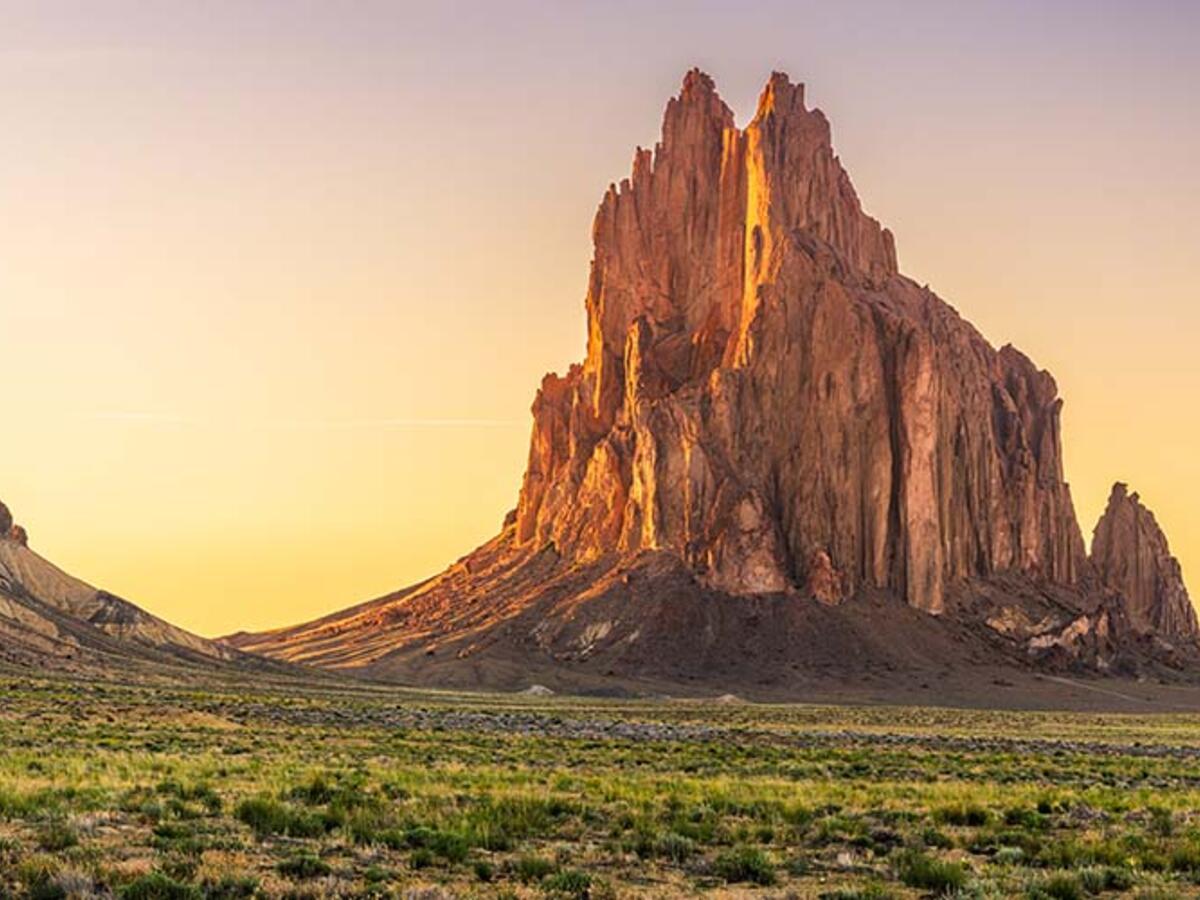
“I was raised in the traditional Navajo way of living and I grew up learning how to be a sheep herder and a farmer. But now I’m a cell and molecular biologist,” said San Francisco State University Associate Professor of Biology Wilfred Denetclaw. “But the people that I come from are still living that way.”
Seeing initial reports of COVID-19 in his community, Denetclaw — who normally studies embryonic muscle development — pivoted to studying COVID-19. His findings were recently published in PLOS ONE (Public Library of Science ONE).
“When the outbreak occurred in March 2020, it just seemed like more and more cases were popping up all around the Navajo Nation area on the New Mexico and Arizona side of my reservation,” explained Denetclaw, who grew up in Shiprock, New Mexico.
The Navajo Nation is a Native American reservation covering 27,000 square miles across portions of Arizona, New Mexico and Utah. Despite its size, there’s been a lack of studies about COVID-19 cases and deaths in this community. Denetclaw set out to do something about that with study co-leader Kala Mehta, a biostatistician and epidemiologist at the University of California, San Francisco. Several San Francisco State students in Denetclaw’s lab and SF BUILD students mentored by Mehta also participated in the study.
The team analyzed publicly available data from the first year of the pandemic that was collected from 11 counties that intersected with the Navajo Nation. Their study showed that early in the pandemic, the number of COVID-19 cases on the reservation doubled nearly every 10 days but slowed down to every 32 days by March 2021. The percentage of Navajo people in a county correlated with the number of COVID-19 cases and deaths in a county’s population. The percent of Navajo population in a county was a predictor of COVID-19 deaths, even after considering access to health care. As expected, cases and deaths decreased in early 2021 with the introduction of the COVID-19 vaccine.
Many homes in the Navajo Nation are multigenerational with families clustering — something that was not ideal early in the pandemic. Like his own Navajo home, Denetclaw explains, nearly a third of Navajo homes lack running water, electricity and internet. Poor infrastructure, such as for roads, can make access to good health care difficult.
“[The Navajo Nation] is now the largest federal Indian Reservation — as big as West Virginia in size — but it’s lacking these modern kinds of infrastructure that we take for granted off the reservation,” he said.
However, he shares that this research is a story about the Navajo Nation’s resilience. They have their own government separate from the state, so they could close reservation borders to non-Navajo travelers at the height of the pandemic, instigating a 57-hour curfew on weekends. When vaccines became available, the Navajo president advocated strongly for vaccinations using Navajo culture, like the Navajo creation story, to emphasize the larger importance of vaccination as a protective shield against COVID-19. The community took the message to heart and now vaccination rates are among the highest across the U.S.
“It’s not the individual, but it’s the people, it’s the tribe. That’s what matters,” Denetclaw said about his community’s response to COVID-19 protocols and vaccination.
“And just like our historical or cultural teachings, we were going to have to do battle here with coronavirus and we needed a protective shield,” he explained. “That protective shield is vaccination.”
Though he’s a cell biologist, this is not Denetclaw’s first time doing epidemiological research. He went to Diné College, tribal college in his hometown, and applied for a research program simply to have a job. He studied a common but potent bacterial pathogen in his community that led to high rates of strep throat and rheumatic heart disease. That NIH program — a precursor to the NIH RISE program offered at SF State — hooked him on cell biology and set him on his current trajectory.
“[It is why] I always like to promote the kinds of programs we have in the Student Enrichment Office here at SF State … that are designed to introduce students to research,” he said.
Learn more about SF State’s Biology department and research opportunities offered by the Student Enrichment Office.