Broadcast and Electronic Communication Arts, M.F.A.
Master of Fine Arts
About this program
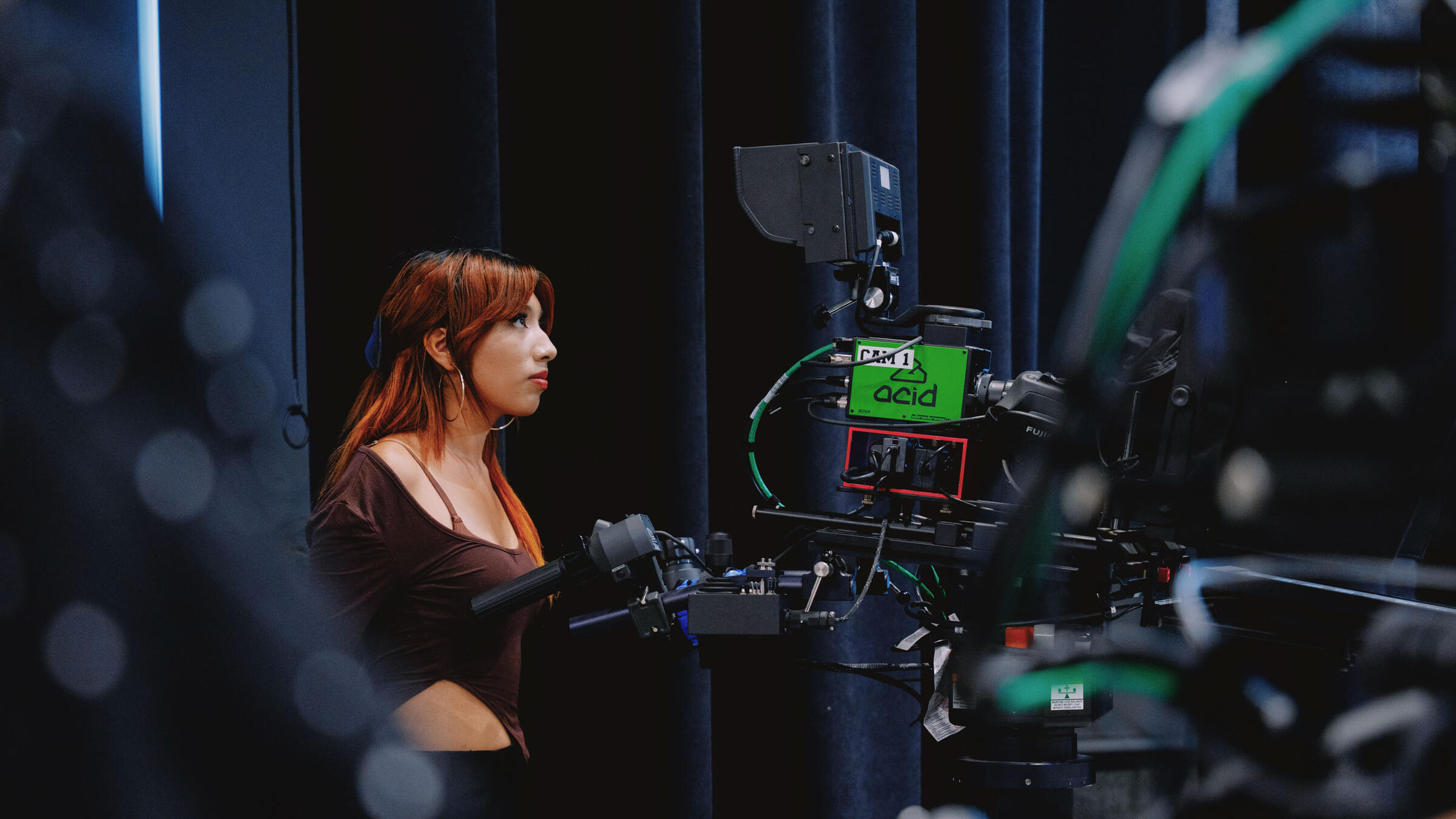
The Master of Fine Arts in Broadcast and Electronic Communication Arts invites you to advance your creative voice in modern media. You’ll design original works using video, audio, digital platforms and experimental formats. The program pairs studio time with theory, ethics and critical thinking. You’ll produce a creative thesis or project to show your vision. It prepares you for careers in media arts, storytelling and creative leadership.
Program Curriculum and Requirements
Program Scope
The Department of Broadcast & Electronic Communication Arts (BECA) M.F.A. Graduate Program invites those who wish to pursue an exciting, dynamic education in media arts with distinguished faculty in our state-of-the-art facilities in San Francisco.
By emphasizing the intersection between art practice, theory, and pedagogy, the 60-unit, three year M.F.A. in Broadcast & Electronic Communication Arts encourages students to develop a vibrant practice and artistic aesthetic, strengthen their ability to think, write and speak critically about their work, and prepare to teach in the media arts.
The culminating M.F.A. experience is a creative project of the student’s design with the guidance of a faculty mentor, which may be video, audio, television, radio/podcasting, scriptwriting, sound design, social media production and media marketing, among many possibilities.
We are pleased to announce that the Department of Broadcast & Electronic Communication Arts (BECA) at San Francisco State University is now part the Western Regional Graduate Program (WRGP) which enables students in 16 Western states and territories to enroll in participating public graduate programs as nonresidents, yet pay the lower resident tuition rate.
Complete degree requirements for the Master of Fine Arts in BECA are available from the SF State Bulletin.
Program Learning Outcomes
- Students will write critiques of professional broadcast and electronic media programs.
- Students will write treatments and scripts for broadcast and electronic media programs.
- Students will demonstrate advanced skills in broadcast and electronic media production.
- Students will write literature reviews that evaluate and synthesize relevant theory and research concerning effective broadcast and electronic media storytelling.
- Students will apply relevant theory to the analysis of broadcast and electronic media programs.
- Students will analyze the strengths and weaknesses of broadcast and electronic media theory and research.
- Individually and in groups, students will conduct original research about the role of broadcast and electronic media in society.
- Students will write original research papers and submit them to academic conferences.
- Students will employ theories of media processes to understand the way broadcast and electronic media function in society.
- Students will apply ethical theories and professional codes of conduct to the evaluation of broadcast & electronic media activities.
- Students will develop the skills to secure funding for broadcast & electronic media content production and distribution.
- Students will apply principles of media literacy and pedagogical theory to the development of materials for teaching broadcast and electronic media.
- Students will evaluate undergraduate papers and productions in broadcast and electronic media.
- Students will present lectures in undergraduate classes in broadcast and electronic media.
Admissions Information
Applicants must meet the minimum university GPA requirement of 3.0 and submit the transcript information as requested. International students whose dominant language is not English must also submit their TOEFL, IELTS, or PTE scores, as required by the SF State Graduate Division. To apply, go to CalStateApply.
As part of the application, BECA M.F.A. applicants must also submit the following:Personal Statement
The personal statement should demonstrate the ability to write at the graduate level. It should address an applicant’s ability to engage in advanced theoretical work, and discuss their interest in pedagogy. Specific details about the applicant’s creative practice, and the types of creative projects they want to pursue while in the program, should also be provided. Applicants may also indicate at least one faculty member in the BECA Department who they believe can offer the guidance necessary to help them achieve their goals while in the program.
Recommendation Letters
Three (3) application letters are required. One letter should (ideally) be written by a faculty member. However, letters from individuals associated with the applicant’s professional production, research, teaching or creative practice are also accepted. All letters should evaluate the applicant’s ability to do advanced theoretical work and their ability to write at the graduate level. They should also address the applicant’s interest in pedagogy and potential for teaching, as well as their creative practice and interests.
Portfolio
Applicants must include a link to their digital portfolios of their creative work. An exhibition list of each creative example in the portfolio must be provided. The role the applicant played in each piece, and its relevance to what they want to do in the program must be clarified.
A Production and Exhibition Résumé
Please provide a résumé that focuses on your record of production work, art exhibitions, professional presentations, published articles, honors and awards, and other exhibitions and distribution of your work.
Applications to the BECA M.F.A. program must be submitted through CalState Apply by March 1, 2026 for consideration.
Ready to apply? Visit the Graduate Students page to get started.
We’re Here to Help
Questions about the program or how to apply? Don’t hesitate to reach out.
Melissa Camacho
- Professor