Art, M.F.A
Master of Fine Arts
About this program
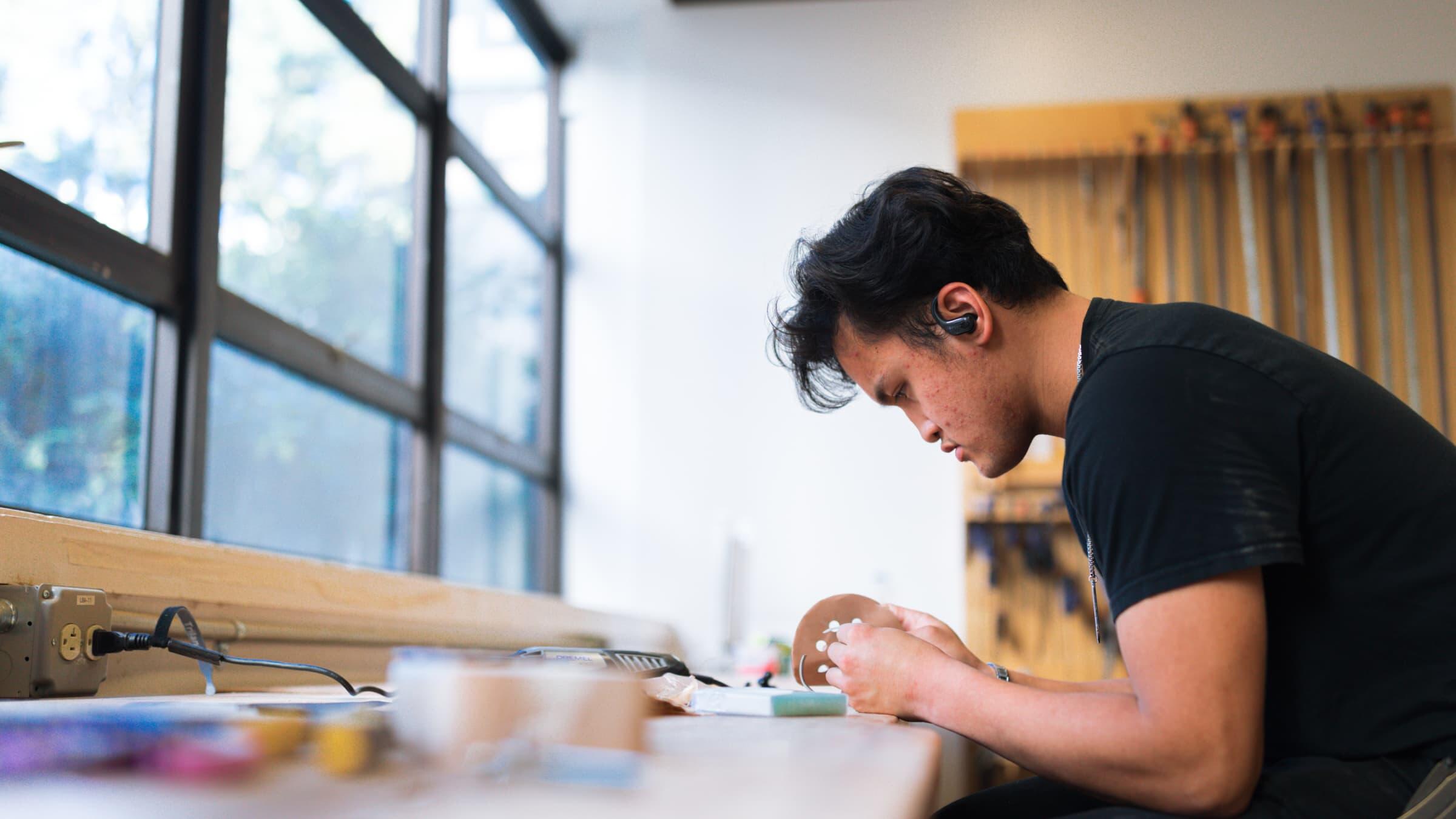
The Master of Fine Arts in Art supports your growth as a professional artist through studio practice, research, and critique. You’ll work closely with faculty mentors and explore areas like painting, sculpture, textiles, ceramics, and digital media. You’ll take seminars, develop a cohesive body of work, and complete a final thesis exhibition. The program gives you space, tools, and guidance to build a focused art practice while preparing for a creative career or further academic work.
Program Curriculum and Requirements
Program Scope
The 60-unit, Master of Fine Arts in Art program at SF State is completed in two years and is designed to provide professional competency for the student pursuing a career as an artist including working in public roles. The master of fine arts in art program at SF State is interdisciplinary and allows students to work across media or focus their studio practice within traditionally defined areas of ceramics, digital media and emerging technology, painting and drawing, photography, printmaking, sculpture or textiles.
Disciplines
The master of fine arts in the art program at SF State is interdisciplinary and allows students to work across media or focus their studio practice within traditionally defined areas of ceramics, digital media and emerging technology, painting, and drawing, photography, printmaking, sculpture or textiles.
Studio Space
All master of fine arts in art students have access to graduate studio space on the main SF State campus. A communal graduate space located on the second floor of the Fine Arts building provides studios for up to 10 graduate students. Other, medium-specific studio spaces located throughout the building are available to graduate students based upon need.
Program Learning Outcomes
- Able to produce professional creative work – generate a cohesive body of work.
- Sophisticated understanding of a range of visual art practices.
- Able to discuss historic, cultural, and contemporary theory related to their own creative work.
- Must demonstrate commitment to a career in art and potential to grow artistically.
Admissions Information
Current Resume/Curriculum Vitae
- Categories should include Education, Exhibitions, Publications, Special Activities and Awards, Related Employment.
- List information with the most recent activity first.
Creative Work Portfolio
- The submitted portfolio is one of the most critical components of the application.
- The Graduate Selection Committee, composed of the entire full-time art faculty, screens documentation of work in search of candidates with strong artistic direction and with the promise of continuing in a sustained, independent, and exploratory manner.
- Portfolios not meeting the following requirements will not be reviewed. The organization of your materials is an element that will be considered in evaluating your application.
- The Selection Committee will review a maximum of 20 images from each candidate.
- Images should be labeled with the work’s title, date, media, size, and other significant information.
- Where appropriate, other documentary material is admissible in place of images. This may include films, audio and/or video, or web-based work. If applicable, please include a link in the PDF of the URL for the video and/or digital-based work.
- Due to time constraints, time-based digital media and films should be cued and cannot exceed three minutes. Short segments should be excerpted from longer pieces. Full-length versions of time-based media can be included as a supplement but should be labeled as such. These versions will not be considered during the first round of the review process.
Written Statement
- Please submit a 500 – 1,000 word artist statement that addresses the following: Describe the significance of your work and the concepts, research, and/or processes that drive your studio practice within the context of contemporary artistic practice. Why do you think you are prepared for a master of fine arts program in studio art and what do you hope to get out of the graduate-level study?
Letters of Recommendation
- Three letters of recommendation. Letters of recommendation should be from individuals qualified to testify to the applicant's capabilities and readiness to enter graduate study in art.
Transcripts
- Provide transcripts from all institutions of higher learning attended.
Fall: February 1
No Spring Admissions
Ready to apply? Visit the Graduate Students page to get started.
We’re Here to Help
Questions about the program or how to apply? Don’t hesitate to reach out.
Michael Arcega
- Professor